 The Cry of a Nation in Pain
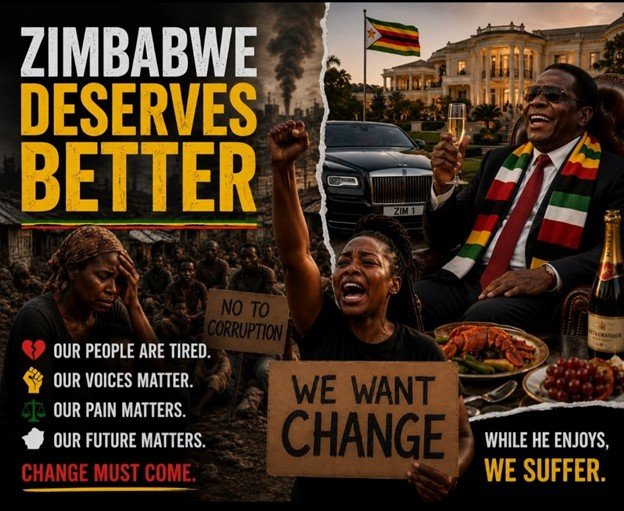
Zimbabwe is a country blessed with rich soil, mineral wealth, educated people, and a resilient spirit. Yet despite all these blessings, millions of Zimbabweans continue to suffer under economic hardship, political oppression, corruption, and the painful erosion of basic human rights. The image before us tells a story that words alone often fail to capture — the contrast between the suffering of ordinary citizens and the luxurious lifestyles enjoyed by those in power.
For decades, Zimbabweans have endured unbearable challenges. Hospitals lack medication and equipment. Schools struggle with poor resources. Electricity cuts and water shortages have become normal. Unemployment has forced many talented and hardworking citizens to leave their homeland in search of survival abroad. Families have been separated for years because parents, children, brothers, and sisters are scattered across different countries trying to provide for loved ones back home.
What makes the pain even deeper is the feeling that the voices of ordinary citizens are ignored. Many Zimbabweans feel silenced by fear, intimidation, and the abuse of power. Human rights activists, journalists, opposition supporters, and ordinary citizens who speak out against injustice often face harassment, arrests, violence, or threats. Freedom of speech — a right that every human being deserves — is too often treated like a crime.
The emotional burden carried by Zimbabweans, both at home and in the diaspora, is immense. Back home, people wake up every day uncertain about how they will survive. Parents struggle to feed their children. Graduates with degrees sell goods on the streets because jobs are scarce. Pensioners who worked their entire lives cannot afford basic necessities. Citizens live with frustration, disappointment, and exhaustion.
For those living abroad, the pain is different but equally heavy. Zimbabweans in the diaspora carry constant guilt, heartbreak, and helplessness. They watch from afar as their country suffers, while doing everything they can to support families through remittances. Many left Zimbabwe not because they wanted to abandon their home, but because circumstances forced them to choose survival over comfort. Even while building lives in foreign lands, their hearts remain connected to Zimbabwe.
Every video of police brutality, every report of corruption, every story of a missing activist, and every economic collapse reopens emotional wounds. Zimbabweans everywhere are tired of seeing their nation associated with suffering instead of opportunity. They are tired of promises without change. They are tired of leaders who appear disconnected from the realities faced by ordinary people.
The image of citizens protesting with signs reading “We Want Change” reflects more than political frustration. It reflects desperation, pain, and hope all at once. Hope that one day Zimbabwe can become a nation where leaders serve the people instead of enriching themselves. Hope for justice, accountability, and equal opportunity. Hope for a country where young people can dream again without needing to leave home.
Zimbabweans are not asking for miracles. They are asking for dignity. They are asking for fair governance, respect for human rights, economic stability, healthcare, education, and freedom. They are asking for a government that listens instead of suppressing. They are asking for a future where citizens can live without fear.
True patriotism is not silence in the face of suffering. True patriotism is loving a country enough to demand better for its people. Zimbabwe deserves leaders who prioritize the nation above personal gain. Zimbabwe deserves peace, justice, transparency, and unity. Above all, Zimbabwe deserves hope restored.
The cry of the people cannot be ignored forever. A nation’s strength lies not in the wealth of a few, but in the wellbeing of its citizens. Until the voices of ordinary Zimbabweans are respected and their rights protected, the wounds of the nation will continue to deepen.